
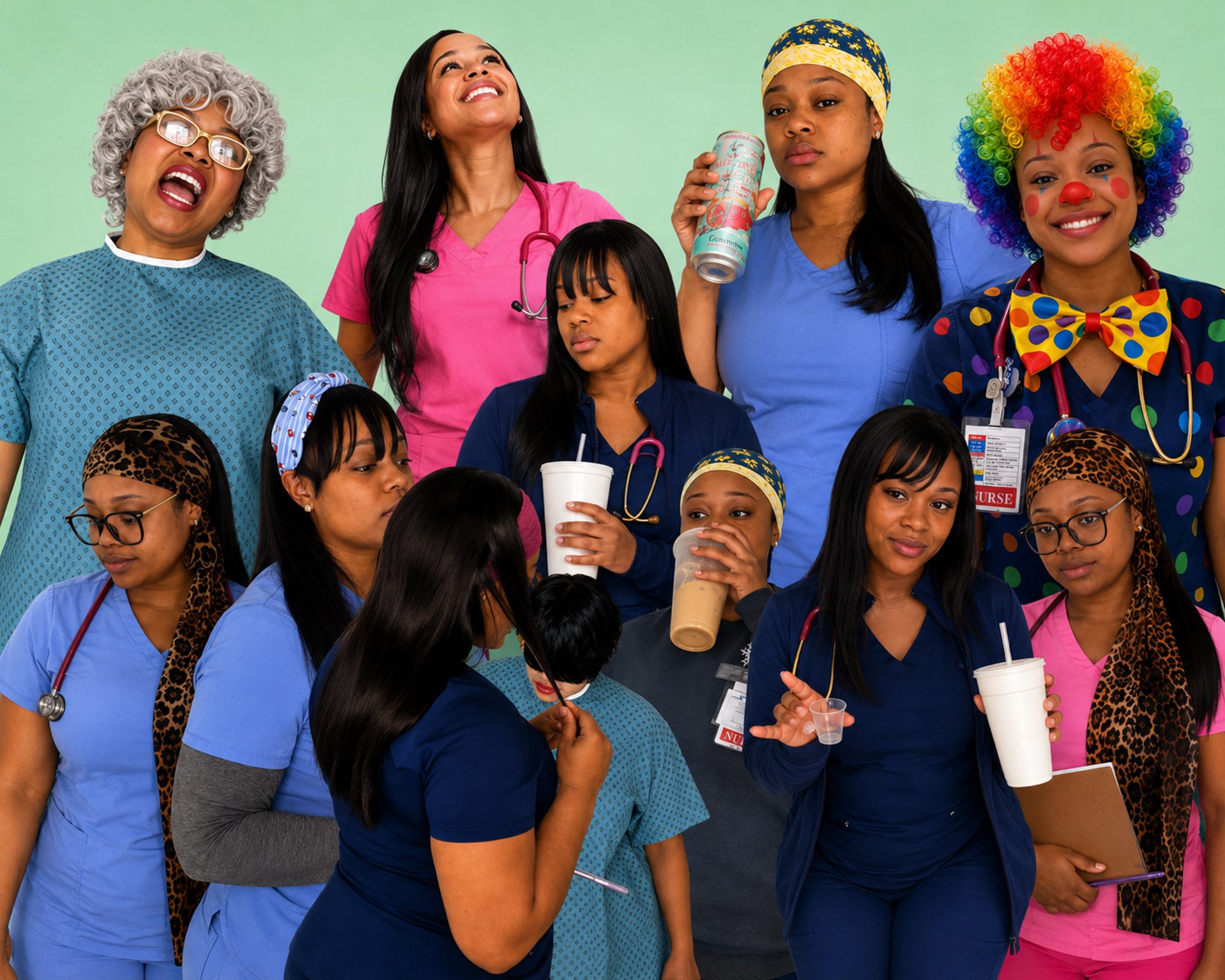
Is Nursing Really What We Thought It Would Be
Nursing offers incredible purpose, but purpose alone doesn't erase staffing shortages, documentation burdens and impossible expectations. This is a reflection of the reality behind the expectations.
6/25/20262 min read
Is Nursing Really What We Thought It Would Be?
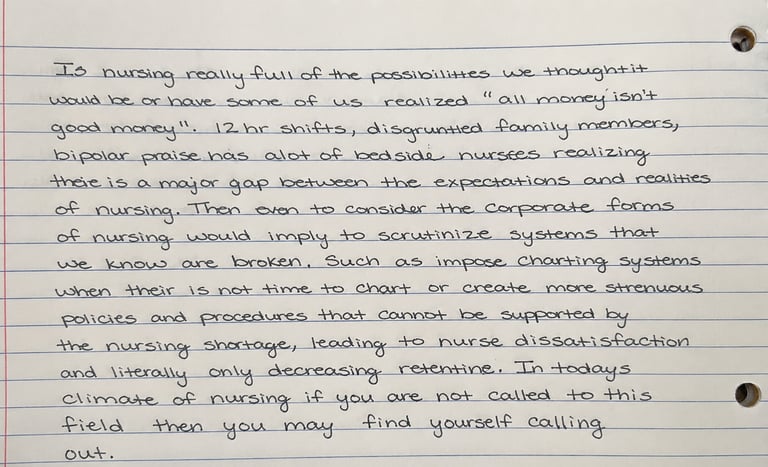
📓 From the Notebook — I originally wrote these thoughts in my notebook before expanding them into this article.
"All money isn't good money."
It is a simple sentence.
Yet for many nurses, it is a lesson learned the hard way.
Most of us entered nursing believing we understood what the profession would ask of us. We expected long shifts, difficult patients, and emotionally challenging days. We accepted that caring for people during the worst moments of their lives would never be easy.
What many of us didn't anticipate was that the greatest challenges wouldn't always come from illness.
Sometimes they would come from the system itself.
The Expectation
Nursing school teaches us to think critically, advocate fiercely, and provide compassionate, evidence-based care. We imagine ourselves making a meaningful difference for patients while working alongside a team with the same mission.
There is truth in that vision.
Every day nurses save lives, comfort families, and carry people through moments they will never forget.
But that is only part of the story.
The Reality
Reality often looks different.
Twelve-hour shifts become thirteen.
Documentation grows while time at the bedside shrinks.
Staffing shortages become normal instead of temporary.
Policies continue to expand even when the resources needed to meet them do not.
Families are understandably stressed, yet nurses often become the face of frustrations that began long before anyone entered the hospital room.
None of these realities exist in isolation.
They accumulate.
And over time, they create a growing gap between the profession many imagined and the profession many experience.
When Systems Create Impossible Expectations
Healthcare organizations rarely intend to make patient care harder.
Many initiatives begin with good intentions: improve safety, reduce errors, increase accountability, standardize care.
But every new requirement carries a cost.
Every additional assessment, documentation requirement, mandatory education module, quality metric, or compliance measure competes for the same finite resource.
Time.
When expectations continue to grow while staffing does not, nurses are forced into impossible decisions.
Do I spend another five minutes documenting?
Or five more minutes with my patient?
Neither choice should feel like a compromise.
Yet too often it does.
Burnout Isn't Always About the Work
Most nurses don't leave because caring for patients is difficult.
They leave because constantly feeling unable to provide the care they know patients deserve becomes emotionally exhausting.
The issue isn't simply hard work.
It's moral distress.
Knowing what excellent care looks like while repeatedly working in systems that make delivering it increasingly difficult.
That distinction matters.
Because solving burnout requires more than resilience training or pizza in the break room.
It requires examining the systems that create unnecessary barriers to patient care.
So... Is Nursing Still Worth It?
Yes.
But loving nursing and acknowledging its problems are not mutually exclusive.
In fact, the people who speak most honestly about healthcare are often the ones who care about it the most.
Recognizing where the profession falls short isn't an attack on nursing.
It's an investment in its future.
Because if we want nurses to stay, patients to receive excellent care, and healthcare to remain sustainable, we cannot ignore the widening gap between expectation and reality.
The conversation isn't about whether nursing is still a calling.
It's about making sure the profession supports the people who answered that call.