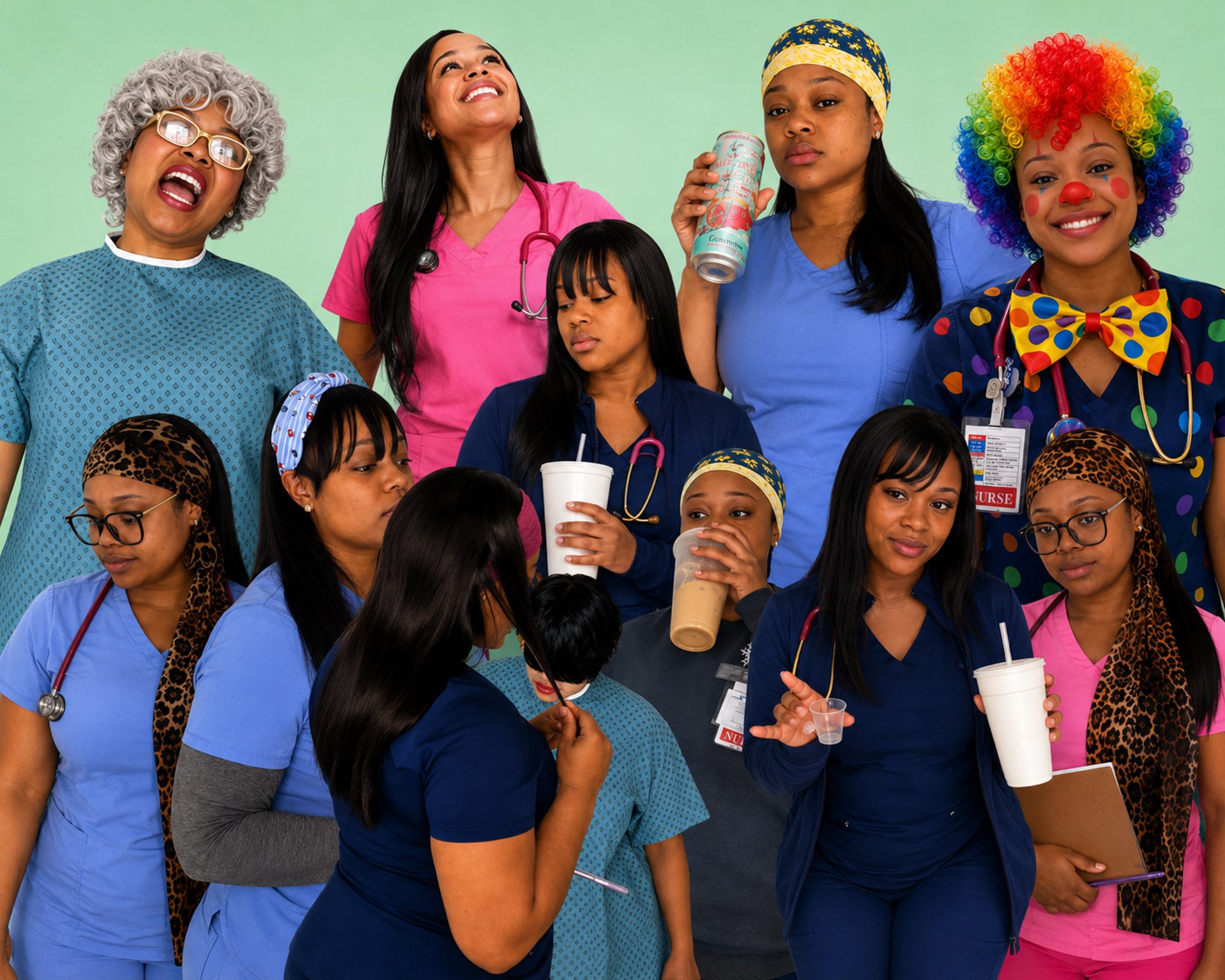
Nurse Of All Trades
8/4/2026


Nurse of All Trades
When "helpful" becomes "expected"
The field of nursing has become synonymous with “Jack of All Trades.”
There is this trending AI video where mothers transform into all the different professions they seem to become throughout the day. Then I saw wives doing it for their husbands, children doing it for their parents, and eventually… a nurse.
At first, it was funny. The nurse transformed into a chef, IT support, and a therapist. But as I kept watching, it started to hit differently. The nurse became an HVAC technician. A punching bag. A security guard. A police officer.
The video had thousands of views and hundreds of comments. Reading through them, I realized something. We all seem to share the same expectations, the same experiences, and maybe even the same conditioning.
People often talk about all the different hats nurses wear, but I don’t think we talk enough about how casually those additional responsibilities are treated.
A patient representative stops you in the middle of passing medications because the television isn’t working. A family member wants you to order the patient’s lunch. Someone needs help finding a blanket. Another room needs the thermostat adjusted. Individually, none of these requests seem unreasonable.
“They’ll only take a minute.”
But nursing is rarely interrupted just once.
Those “couple of minutes” happen while we’re already managing short staffing, unequal workloads, missing equipment, admissions, discharges, alarms, medications, documentation, and patients whose conditions can change in seconds.
Every minute matters. It isn’t that nurses are incapable of doing these things.
We are.
But then again… almost anyone could.
The question isn’t whether nurses can perform these tasks. The question is what happens when the profession gradually becomes responsible for everything else without anything ever being taken away.
When “helpful” becomes “expected.”
And every new expectation quietly accumulates until nurses have less time to master nursing itself. Instead, we are expected to become jacks of all trades—the default solution for every problem inside the hospital.
Maybe that’s why this trend resonated with so many nurses. It wasn’t because it exaggerated our role.
It was because, for many of us, it didn’t feel like an exaggeration at all.