

When Nurses Become Hospital Security: The Growing Reality of Workplace Violence
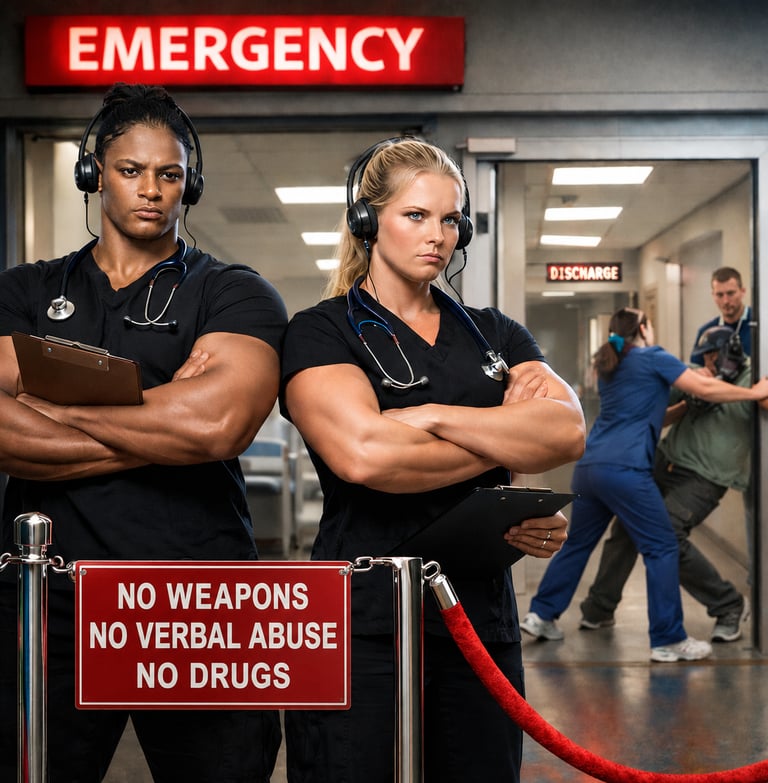
Nurses are caregivers, advocates, and educators—but increasingly, we're expected to be security too. Patient care and staff safety shouldn't compete.
Whitley F
6/22/20262 min read
Healthcare has quietly transformed the role of the bedside nurse.
Today's nurses are expected to provide safe patient care, administer medications, coordinate treatment plans, educate patients and families, document extensively, and respond to medical emergencies. Increasingly, they are also expected to manage aggressive behavior, de-escalate conflict, navigate confrontational family interactions, and protect themselves from workplace violence.
In many healthcare settings, nurses have become the first line of defense against behaviors that once would have been handled primarily by security personnel or specialized crisis teams.
We meet people at some of the most difficult moments of their lives—from the moment they arrive in the Emergency Department until the day they are discharged. Pain, fear, confusion, mental health crises, substance withdrawal, grief, and frustration can all contribute to challenging interactions.
As a result, bedside nurses are often expected to:
De-escalate aggressive patients
Manage confrontational family members
Respond to threatening behavior
Absorb verbal abuse professionally
Maintain patient safety during behavioral crises
Continue delivering quality patient care throughout it all
The conversation surrounding workplace violence in healthcare is often reduced to isolated incidents, but the reality is much broader.
Violence against healthcare workers has become a significant occupational safety concern affecting hospitals, emergency departments, inpatient units, outpatient clinics, and long-term care facilities. While security teams play an important role, they are not present in every patient room, every hallway, or every interaction. Nurses frequently find themselves managing escalating situations long before additional support arrives.
This evolution of the nursing role has happened gradually, often without a corresponding increase in staffing, training, resources, or support systems.
The result is a growing expectation that nurses function simultaneously as clinicians, emotional regulators, crisis managers, patient advocates, and frontline protectors.
This is not about assigning blame to patients, families, healthcare organizations, or individual staff members.
It is about acknowledging a reality that many healthcare workers experience every day.
When workplace violence becomes part of routine patient care, the effects extend beyond the individual nurse. Staff morale suffers. Burnout increases. Turnover rises. Patient care can be affected. Healthcare organizations face challenges retaining experienced clinicians in environments where personal safety feels uncertain.
Addressing workplace violence in healthcare requires more than policies on paper.
It requires realistic staffing models, effective security support, clear reporting systems, meaningful follow-up after incidents, leadership engagement, and a willingness to recognize how much frontline healthcare has changed.
Nurses entered the profession to provide care, comfort, education, and advocacy.
They should not have to choose between caring for patients and protecting themselves.
As healthcare continues to evolve, protecting the people who provide that care must remain a priority—not only for the wellbeing of nurses, but for the safety and stability of the healthcare system as a whole.